Tag: local nigerian fruits

  • Mmimi Fruit: the small Nigerian fruit with a peppry seed


    You Think It’s Just a Fruit… Until You Taste Mmimi


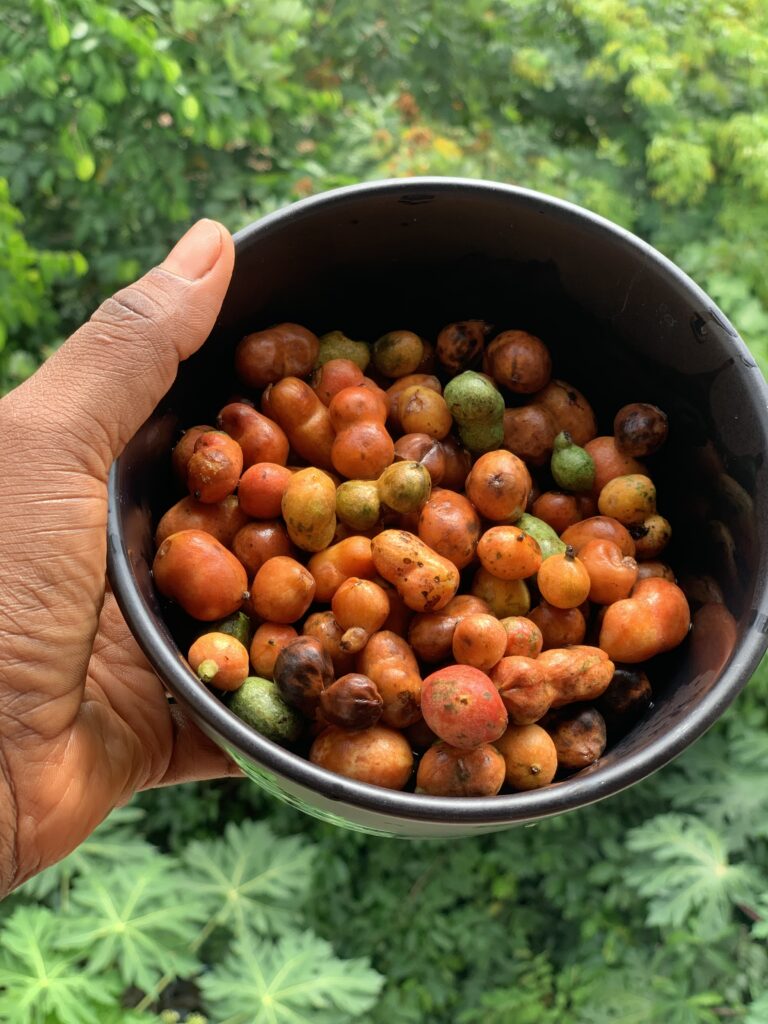
    If you grew up in Nigeria, chances are you’ve come across a handful of small, oddly shaped fruits called Mmimi. They’re not the prettiest fruits on first glance, some are green, others orange, but one bite and you understand why people keep going back for more.

    Botanically, this fruit is known as Dinnettia tripetala, wild-growing plant found across west Africa especially in Nigeria , in bushy or uncultivated areas.

    What Mmimmi Looks Like


    Mmimmi fruits are typically:

    • Small and sometimes slightly deformed
    • A mix of green, pink, orange, and brown depending on ripeness
    • Often marked with spots or natural blemishes

    They don’t have the polished look of supermarket fruits, and that’s exactly how you know they’re the real deal.


    Taste Profile: Where It Gets Interesting

    The flesh of Mmimmi is:

    • Spicy and slightly sour when unripe
    • Spicy and a bit sweeter as it ripens

    But the real surprise is inside.

    Crack the seed open, and you’ll notice a distinct peppery, spicy taste. That sharp kick is what sets Mmimmi apart from other wild fruits and makes it memorable.


    Where It Grows


    Mmimi isn’t your typical plantation fruit. It grows:

    • In the wild or bush areas
    • Around rural compounds
    • In dry and semi-humid environments

    This is not a fruit people usually farm intensively—it’s mostly foraged, which adds to its local value.


    Nutritional and Traditional Value


    While not heavily commercialized, Mmimi is valued for:

    • Its natural vitamin content, especially vitamin A,C and E. And it also contains magnesium, calcium and protein.

    • Its role as a refreshing snack in hot weather
    • Occasional use in traditional remedies in some communities

    Like many wild fruits, it’s under-researched but widely trusted locally.


    How People Eat It

    There’s no complicated preparation:

    • Wash it
    • Bite into it
    • Suck out the pulp
    • Discard or crack the seed (if you can handle the spice)

    Some people also soak it slightly or mix it into local drinks, but most prefer it raw.


    What to Watch Out For


    Not every of its fruit is good to eat.

    Avoid:

    • Fruits that are too soft, blackened, or smelling off
    • Overripe ones that may already be fermenting

    And be careful with the seeds, that peppery kernel can irritate your stomach if you eat too much of it.