
10 Simple Things You Can Do to Make Your Children Feel Loved Every Day

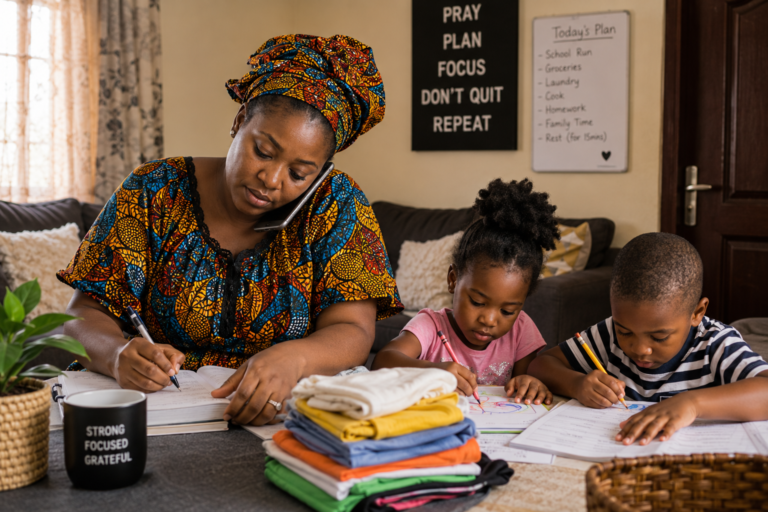
Photo by Dmitry Rodionov on Unsplash
As mothers, we spend so much time taking care of our children that it is easy to forget that they also need to feel loved, not just be cared for.
We make sure they eat, get ready for school, do their homework, take their bath, have clean clothes and get everything they need. There is always something to do. Before you finish one task, another one is already waiting.
But in between all these everyday responsibilities, there are little things our children are paying attention to.
They notice when we listen to them.
They notice when we are happy to see them.
They notice when we sit down beside them, even when we are busy.
They notice when we hug them after a difficult day or encourage them when something isn’t going well.
And honestly, we don’t have to make every day special for our children to feel loved. A lot of it happens in the ordinary moments that don’t seem important at the time.
As mothers, we are not going to get everything right. There will be days when we are tired, impatient, distracted or simply overwhelmed. That’s part of being human.
What matters is that our children continue to experience love, attention, affection and reassurance from us.
Here are 10 simple things you can do to help your children feel loved every day.
1. Give them your full attention, even if it is only for a few minutes
Children ask us questions at the most inconvenient times.
You could be cooking, washing plates, replying to a message or trying to finish something important, and suddenly you hear:
“Mummy, come and see this.”
And somehow, whatever they want you to see is usually something you would never have considered important five minutes ago.
But it is important to them.
Sometimes, we don’t have the time to stop everything. That’s normal. But when you can, stop for a moment and look.
If your child is showing you a drawing, look at it.
If they want to tell you a story about what happened at school, listen.
If they want to show you something they built, let them explain it.
You don’t have to spend an entire afternoon doing this. Even five minutes of genuine attention can mean a lot.
There is a big difference between hearing a child and actually listening to them.
And if you want to make your children feel loved, one of the easiest places to start is by letting them know that what matters to them matters to you too.
2. Hug them more often
This sounds very simple, but physical affection can easily disappear when children get older.
When they are babies, we carry them everywhere. We kiss their cheeks, cuddle them, hold their hands and spend hours with them in our arms.
Then they grow.
Suddenly they are running around the house, going to school, doing homework and becoming more independent.
Don’t let the hugs disappear completely.
Hug your child before they leave for school.
Hug them when they come home.
Give them a hug when they have had a bad day.
Sometimes, you don’t even need to say anything.
A child who has just had a difficult day may not want a lecture. They may not even know how to explain what is wrong.
A hug can simply say, “I’m here.”
And mothers, don’t underestimate how comforting that can be.
3. Say “I love you” without waiting for a special moment
Of course, our children should know that we love them. But hearing it still matters.
Tell them.
Tell them when they are doing well.
Tell them when they are struggling.
Tell them before they go to bed.
Tell them on an ordinary Tuesday when nothing special happened.
And don’t make “I love you” something they only hear after they have done something good.
Our children should not feel that love is a reward for good behaviour.
You can correct a child and still tell them you love them.
You can be disappointed in their behaviour and still remind them that they are loved.
You can say, “What you did was wrong, and we need to talk about it,” without making the child feel that they themselves are bad.
There is a difference between correcting a child’s behaviour and making the child feel unwanted.
That difference matters.
4. Create little routines that belong to the two of you
You don’t need expensive family traditions.
Some of the things children remember most may be things that seem completely ordinary to us.
Those everyday moments can become some of the childhood memories our children carry with them for years. I shared more about this in [7 Things Kids Remember About Their Childhood That Can Shape Who They Become].
Maybe you always sit beside them while they do their homework.
Maybe Saturday mornings mean pancakes.
Maybe you pray together before bed.
Maybe you always ask, “What was the best part of your day?” during dinner.
Maybe your child knows that whenever you go to the market, they are allowed to choose one small snack.
These little routines may not look important when you are doing them.
But children love knowing what comes next.
They love familiar things.
They love those little moments that become “our thing.”
So don’t worry if your family traditions don’t look like what you see online.
Your children don’t need a picture-perfect family tradition.
They need something real.
5. Listen when they are telling you something, even when it sounds unimportant
One thing I have noticed about children is that they can spend ten minutes telling you about something that takes you about ten seconds to understand.
But let them talk.
That story about who sat beside them in class today may not seem important.
The argument they had with their friend may sound small.
The strange thing their teacher said may not change anything about your life.
But these little conversations are how children learn that they can come to you.
And that becomes very important when the conversations are no longer about cartoons, school lunches and playground arguments.
If your child learns from an early age that you listen when they talk, they are more likely to feel comfortable coming to you when something really matters.
You don’t have to have the perfect answer every time.
Sometimes they just want you to hear them.
6. Notice their effort, not only their results
This is one I think we mothers should pay more attention to.
We naturally notice results.
“Did you pass?”
“Did you finish your homework?”
“Did you clean your room?”
“What score did you get?”
But children also need us to notice effort.
Maybe your child struggled with a particular subject but kept trying.
Maybe they helped their younger sibling without being asked.
Maybe they tried to clean their room, even though they didn’t do it perfectly.
Maybe they were nervous about something but still went ahead and tried.
Tell them you noticed.
You can say:
“I saw how hard you tried.”
“I know that wasn’t easy for you.”
“You didn’t give up.”
“I am proud of the effort you made.”
These words can mean more than simply praising a good result.
They teach children that they are seen for more than what they achieve.
7. Apologise when you get it wrong
This one can be difficult for us as mothers because sometimes we feel that saying sorry will make us look weak.
It won’t.
You are still the mother.
You are still the parent.
But you are also human.
There will be days when you shout too loudly.
There will be times when you misunderstand what happened.
There may be moments when you react out of tiredness and later realise that you could have handled the situation differently.
When that happens, apologise.
You don’t have to give a long speech.
You can simply say:
“Mummy was too harsh earlier. I’m sorry.”
That’s it.
An apology doesn’t remove your authority.
It teaches your child something valuable: people can make mistakes, admit them and make things right.
And honestly, there is something beautiful about a child seeing their mother humble herself enough to say, “I was wrong.”
8. Spend time with them without trying to turn everything into a lesson
Not every moment with your child needs to be educational.
Sometimes, just have fun.
Sit on the floor with them.
Tell silly jokes.
Dance around the house.
Play a game.
Watch something together.
Talk about random things.
Let them make you laugh.
Motherhood can become so focused on raising responsible children that we forget to actually enjoy the children we are raising.
Yes, they need discipline.
Yes, they need boundaries.
Yes, we need to teach them manners, responsibility and good behaviour.
But they also need to know that being around Mum can be enjoyable.
You don’t have to plan an expensive outing.
Sometimes the best memories are made in the sitting room while everyone is laughing over something nobody else would understand.
9. Speak well about them, especially when they are not in the room
This is something I wish every mother would think about.
Children may not hear everything we say about them, but the way we speak about them matters.
Try not to make your child feel like they are always the difficult one, the stubborn one, the lazy one or the troublesome one.
When you constantly describe a child using negative labels, they can begin to believe that this is simply who they are.
Of course, there will be behaviour that needs correcting.
Correct it.
But leave room for your child to grow beyond their mistakes.
Instead of:
“He is always troublesome.”
Try:
“He has been struggling with his behaviour lately, and we are working on it.”
There is a difference.
One describes the child as the problem.
The other describes a problem the child can work through.
Our children need to know that one bad decision, one poor grade or one difficult season does not become their entire identity.
10. Remind them that they can always come home to you
As children grow, their world becomes bigger.
They will have friends you don’t know.
They will have experiences you weren’t there to see.
They will make decisions you may not agree with.
Eventually, there will be things they are embarrassed to tell you.
This is why I think one of the most important things we can give our children is the confidence that they can come to us.
Tell them:
“If something happens, you can always tell me.”
“If you make a mistake, come and talk to me.”
“If you are scared, call me.”
“Even when you know I may be upset, please still come to me.”
That doesn’t mean there won’t be consequences.
There should be consequences when necessary.
But your child should know that being afraid of disappointing you should never stop them from asking for help when they really need it.
That kind of trust is built over many small moments.
You Don’t Have to Do All 10 Things Every Day
Please don’t read this list and start feeling guilty.
That’s not what this is about.
You are already doing a lot.
Some days you will be patient.
Some days you won’t.
Some days you will sit and listen to every story.
Other days you will be too tired to do much more than get everyone fed, bathed and into bed. And if motherhood feels heavy sometimes, you’re not alone.
You don’t have to perform love perfectly every single day.
What matters is the pattern your child experiences over time.
Let them experience affection.
Let them experience your attention.
Let them know they can talk to you.
Let them see you apologise.
Let them know that discipline doesn’t mean rejection.
Let them know that their home is a place where they are valued.
And when you get it wrong, try again tomorrow.
The Little Things Really Do Matter
Sometimes we mothers worry so much about whether we are giving our children enough.
Are we buying enough?
Are we doing enough activities?
Are we spending enough money?
Are we giving them enough opportunities?
Those things can matter, but I don’t think they are the whole story.
Your child may not remember every toy you bought.
They may not remember the exact meal you prepared on a random Wednesday.
They may not remember every outing.
But they may remember that Mum listened to their long stories.
They may remember being hugged when they were sad.
They may remember that you celebrated their little achievements.
They may remember laughing with you in the kitchen.
They may remember that even when they made mistakes, they could still come home and talk to you.
And perhaps that is the beautiful part of motherhood.
We don’t always know which ordinary moment is becoming a precious memory for our children.
So while we are busy trying to give them a good childhood, let’s not forget to actually be present for it.
Because sometimes, the little things we almost don’t notice are the very things our children carry with them.
And if you are a mother reading this feeling like you haven’t done enough, take a breath.
You don’t have to start tomorrow as a completely different mother.
Start with one small thing.
Give your child a proper hug.
Listen to that story.
Sit beside them for a few minutes.
Tell them you love them.
That’s a very good place to begin. For more practical and honest parenting ideas, you can explore our [Motherhood & Family Life] section.