
7 Things Kids Remember About Their Childhood That Can Shape Who They Become

Photo by Vitolda Klein on Unsplash
When we think about what our children will remember about their childhood, we often think about the big things.
The birthday parties.
The Christmas presents.
The family holidays.
The expensive toys.
The beautiful clothes we bought them.
The pictures we took.
And of course, those things can become lovely memories. But the older I get, the more I realize that children are also paying attention to the ordinary things we sometimes don’t even notice.
They remember how home felt.
They remember how you spoke to them when they made a mistake.
They remember whether someone listened when they had something to say.
They remember the little routines you thought were nothing special.
They remember laughing with you in the kitchen.
They remember sitting beside you.
They remember being comforted.
They remember feeling safe.
And these everyday experiences can become part of the way children understand themselves, their relationships and the world around them. Research has found associations between positive childhood relationships and stronger family and adult relationships later in life.
That doesn’t mean we have to become perfect parents.
Actually, I think that is one of the most important things to remember.
Your children don’t need a perfect childhood. They need a childhood filled with enough love, safety, connection and ordinary moments that tell them, “You matter here.”
Here are seven things your children may remember long after they’ve forgotten the toys you bought them.
1. How You Made Them Feel When They Were With You
This one is probably bigger than we realize.
Children may not remember every conversation you had with them, but they can remember the feeling of being around you.
Did they feel safe talking to you?
Did they feel like they could come to you when something was wrong?
Did they feel accepted even when they made mistakes?
Did they feel like home was a place where they could relax and be themselves?
A child doesn’t need a parent who gets everything right. But having a safe, stable and nurturing relationship gives children an important foundation for emotional and social development.
You can learn more about healthy emotional development in children and the role parents play in supporting it from the American Academy of Pediatrics.
Think about the difference between a child who grows up constantly wondering, “Will I be in trouble if I say this?” and one who thinks, “I can tell Mum. She might not like what I did, but I can talk to her.”
That feeling of safety matters.
And it doesn’t require expensive things.
Sometimes it looks like sitting beside your child while they talk about something that seems completely unimportant to you.
Sometimes it is a hug after a difficult day.
Sometimes it is simply saying, “Come here. Tell me what happened.”
Those moments may seem small to us.
They aren’t always small to a child.
2. The Little Things You Did Together
There are things we do with our children that feel completely ordinary while we’re doing them.
Making breakfast.
Going to the market.
Walking to school.
Cooking together.
Doing laundry.
Watching a favourite programme.
Sitting outside in the evening.
Talking before bedtime.
Running errands together.
You may not think, “This is a childhood memory my child will carry forever.”
But children don’t need every memory to be a big event.
Family routines and rituals can provide children with a sense of predictability, connection and belonging. Research has linked meaningful family routines with different areas of children’s social, emotional and developmental growth.
Sometimes, it is the repeated little things that become special.
Maybe your child remembers that you always cut their fruit a certain way.
Maybe they remember how you sang while cooking.
Maybe they remember that Saturday mornings meant pancakes.
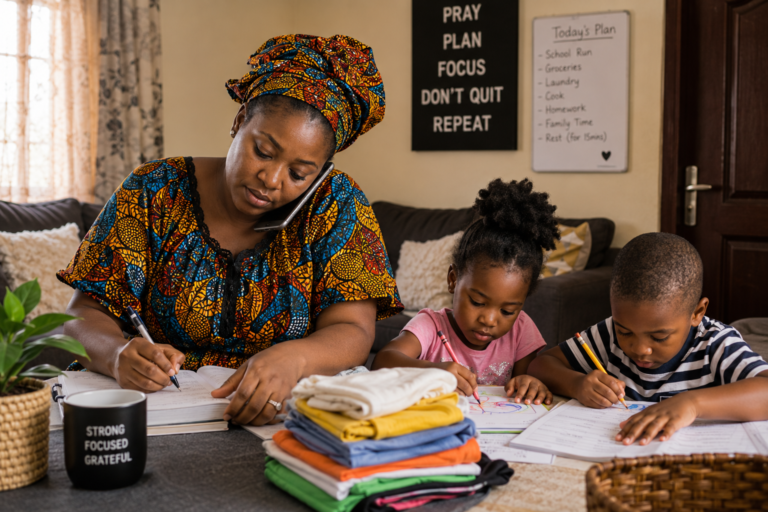
Maybe they remember sitting beside you while you folded clothes.
At the time, you were just getting through your day.
To them, you were creating childhood.
3. How You Responded When They Made Mistakes
Children will make mistakes.
They will spill things.
Break things.
Forget things.
Tell lies.
Lose school items.
Make poor choices.
Say something rude.
And sometimes, they will do things that make you wonder, “What were you thinking?”
It’s easy to focus on correcting the behaviour.
And yes, children need boundaries. They need to learn consequences. They need to understand right from wrong.
But how we respond matters too.
There is a difference between correcting a child’s behaviour and making the child feel like they are the problem.
Imagine a child breaking a cup.
One response might be:
“You are so careless. You never listen.”
Another might be:
“The cup is broken. I know it was an accident, but next time let’s be more careful.”
Both responses address the broken cup.
But they leave very different feelings behind.
Our children need correction, but they also need to know that making a mistake doesn’t make them unworthy of love.
And that is something they can carry into adulthood.
4. The Way You Spoke About Them When They Were Not Around
This is something I think we don’t talk about enough.
Children eventually hear the things adults say about them.
And even before they understand every word, they can pick up on tone, facial expressions and the way people talk about them.
Imagine constantly hearing:
“She’s so difficult.”
“He’s lazy.”
“She’s always causing problems.”
“He can never do anything properly.”
After hearing these things repeatedly, a child may begin to believe that this is who they are.
On the other hand, children who regularly hear encouragement and are treated as capable, valued members of the family can develop a very different sense of themselves.
This doesn’t mean pretending everything your child does is wonderful.
It means separating the behaviour from the child’s identity.
Instead of, “You’re lazy,” we can address the actual behaviour:
“You haven’t finished your homework. Let’s figure out what’s stopping you.”
Instead of, “You’re always rude,” we can say:
“I don’t like the way you spoke to me. Try saying it differently.”
The goal isn’t to avoid correcting children.
It’s to correct them without making them believe there is something fundamentally wrong with who they are.
5. The Times You Were There When They Really Needed You
Children don’t need us beside them every second of every day.
But there are moments when our presence means everything.
The first day at a new school.
A frightening dream.
A difficult exam.
A friendship problem.
A disappointing result.
A competition.
A sickness.
A moment when they feel left out.
A day when they simply don’t feel like themselves.
They may not remember every detail of what happened.
But they may remember that you showed up.
And showing up doesn’t always mean physically attending a big event.
Sometimes showing up means putting your phone down and listening.
Sometimes it means sitting on the edge of their bed.
Sometimes it means helping them practise something for the tenth time.
Sometimes it means saying, “I know this is hard. I’m here.”
Safe, dependable relationships are considered an important protective factor for children’s development and well-being.
That doesn’t require a perfect parent.
It requires a parent who keeps trying to be present.
6. The Things Your Family Did Again and Again
Every family has its own little traditions.
Some are planned.
Some happen without anyone deciding that they are traditions.
Maybe Sunday means visiting Grandma.
Maybe birthdays always involve a particular meal.
Maybe everyone sits together during dinner.
Maybe you have a funny family saying.
Maybe there is a particular song everyone sings in the car.
Maybe Christmas has the same little routine every year.
These things can become part of a child’s sense of belonging.
And they don’t have to cost much money.
In fact, some of the best family traditions are incredibly simple.
A Friday movie night.
Sunday morning breakfast.
A bedtime story.
Cooking together during the weekend.
Taking pictures on birthdays.
Having a special conversation before school starts.
Even small rituals can give children something familiar to look forward to.
As life changes, those familiar moments can become comforting memories.
7. How You Treated Other People
Our children are watching us.
Even when we think they’re not.
They watch how we speak to their father or mother.
They watch how we treat grandparents.
They watch how we speak to people who work in our homes.
They watch how we respond when someone annoys us.
They watch how we behave when we are angry.
And sometimes, our actions teach much louder lessons than our words.
We can tell children to be respectful while shouting at everyone around us.
We can tell them to apologise while refusing to apologise ourselves.
We can tell them to be kind while making fun of other people.
Children learn a lot from what happens around them. Family life provides everyday opportunities for children to learn how relationships work and how people communicate with one another.
This doesn’t mean we have to behave perfectly.
We are human.
We will get frustrated.
We will lose our patience sometimes.
But there is something powerful about letting our children see us repair our mistakes.
“I shouldn’t have spoken to you that way. I’m sorry.”
That sentence can teach a child something important.
It teaches them that being wrong doesn’t have to be the end of a relationship.
You can make a mistake and make things right.
Your Child Probably Won’t Remember Everything You Bought
This is something I find comforting as a parent.
There can be so much pressure to give children the best of everything.
The best clothes.
The latest gadgets.
The biggest birthday celebration.
The expensive toys.
The perfect room.
And while providing for our children is important, we shouldn’t convince ourselves that a beautiful childhood has to be an expensive one.
A child can have a wonderful childhood without having everything.
What often matters is the experience of being loved, supported and connected.
Research on early relationships consistently emphasizes the importance of safe, stable and nurturing connections between children and caregivers.
So don’t underestimate the ordinary things.
The meal you prepared.
The story you read.
The conversation you had.
The laugh you shared.
The hug after a bad day.
The way you showed up.
The way you listened.
The way you told them, “I’m proud of you.”
Those moments may feel ordinary to you because you’re living them.
Your child is growing up inside them.
You Don’t Have to Get Everything Right
Motherhood can feel heavy sometimes, and it’s important to remember that being a good mother doesn’t mean getting everything right.
I want to say this because motherhood already comes with enough pressure.
Reading a list like this can easily make a mother start thinking:
“Am I doing enough?”
“Have I already made mistakes?”
“What if my child remembers the times I lost my temper?”
Please don’t turn this into another reason to feel guilty.
Every parent gets things wrong.
There will be days when you’re exhausted and don’t respond the way you wish you had.
There will be times when you shout.
There will be moments when you are distracted.
There will be days when you don’t have the patience you thought you had.
That doesn’t mean you’ve ruined your child’s childhood.
Relationships can be repaired.
You can apologise.
You can reconnect.
You can try again tomorrow.
One difficult moment does not erase years of love.
What matters is the overall relationship you are building.
What Do You Want Your Children to Remember?
When your children are adults and someone asks them, “What was your childhood like?”, what do you hope they say?
Maybe you hope they remember laughter.
Maybe they remember family meals.
Maybe they remember how their mother always listened.
Maybe they remember their father’s silly jokes.
Maybe they remember feeling safe at home.
Maybe they remember that there wasn’t always much money, but there was always love.
Maybe they remember that their parents weren’t perfect but always tried.
Those are the things worth paying attention to.
Because childhood isn’t built only from the big moments we carefully plan.
It is built from ordinary Tuesdays.
Busy mornings.
Messy kitchens.
Bedtime conversations.
School runs.
Family jokes.
Hugs.
Arguments followed by apologies.
Meals around the table.
Quiet moments together.
And all those little moments that don’t seem important until years later.
So, if you’re raising children right now, don’t feel like you have to create a picture-perfect childhood.
Just be present when you can.
Listen when they need you.
Correct them with love.
Make time for ordinary moments.
Let them know they belong.
And when you get it wrong, repair it and try again.
Because one day, these ordinary days will become the childhood they remember.